
Beyond “Regulating Your Nervous System”
Stress, self-regulation, co-regulation, and what science actually supports

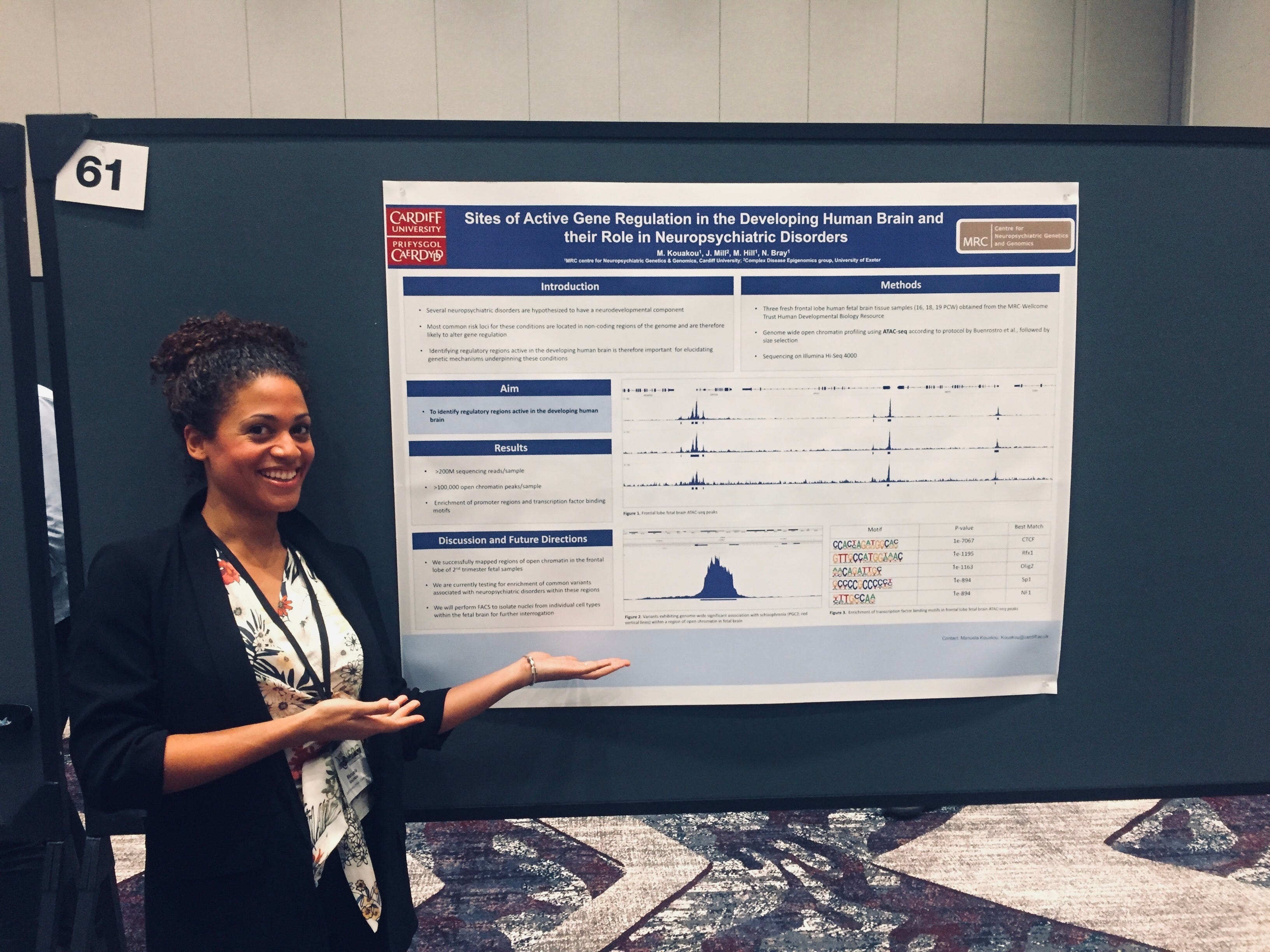
Presenting research during my PhD
In recent years, “regulate your nervous system” has become one of the most common phrases in mental health, parenting, and wellness spaces. It’s used to explain anxiety, burnout, emotional overwhelm, conflict, shutdown, and even physical symptoms—and to prescribe solutions ranging from breathing exercises to cold plunges, meditation, and diet changes.
There is real science beneath this language.
But there are also real limitations.
This resource is an attempt to hold both truths at once:
to explain what nervous-system, self-, and co-regulation actually are,
to ground them in established physiology and psychology,
and to clarify where this language becomes misleading, oversimplified, or quietly burdensome.
What the nervous system does—and what “regulation” really means
The nervous system is not a single dial we can turn up or down. It is a complex, adaptive network involving the brain, spinal cord, peripheral nerves, and multiple interacting subsystems.
Much of today’s regulation language focuses on the autonomic nervous system (ANS), which helps coordinate involuntary bodily functions such as heart rate, blood pressure, breathing, digestion, and energy use.
The ANS includes:
the sympathetic nervous system (often summarized as “fight or flight”), and
the parasympathetic nervous system (often summarized as “rest and digest”).
These labels are useful—but incomplete.
In real physiology:
both systems are often active at the same time,
activation is not inherently bad,
and calm is not the body’s default or ideal state.
When people talk about “regulating the nervous system,” they are usually referring to changes in physiological arousal—heart rate, breathing, muscle tone, and stress hormone activity—that allow the brain to stay sufficiently online to think, relate, and respond rather than react. Regulation does not eliminate stress. It supports recovery after it.
The stress response: adaptive, automatic, and not optional
Stress is not a mindset problem. It is a biological cascade.
When the brain perceives threat—whether physical (an oncoming car), psychological (persistent worry), or social (conflict, evaluation, loss)—it initiates a coordinated response designed for survival.
This process begins in the amygdala, which rapidly evaluates sensory input for danger and signals the hypothalamus, the brain’s command center for autonomic control.
This cascade:
activates the sympathetic nervous system,
releases stress hormones like adrenaline and cortisol,
increases heart rate and breathing,
mobilizes glucose and fats for energy,
sharpens attention and perception.
Importantly, much of this happens before conscious thought. The body does not wait for logic or reassurance.
This is why telling someone to “just calm down” in moments of stress is usually ineffective—and why stress responses are not evidence of poor coping or weak character.
Acute stress vs chronic stress: where health consequences emerge
The human body is well equipped to handle short-term stress. Acute stress can:
improve performance,
support problem-solving,
and help us respond to challenge.
Chronic stress is different.
When stressors persist without adequate recovery, the same adaptive systems remain partially or continuously engaged. Over time, this creates wear and tear across the body—a process often described as allostatic load.
Research shows that chronic stress affects every major system, including:
Musculoskeletal system: persistent muscle tension, headaches, neck and back pain, chronic pain syndromes
Respiratory system: exacerbation of asthma, panic-related breathing patterns
Cardiovascular system: sustained hypertension, inflammation, increased risk of heart attack and stroke
Endocrine system: prolonged HPA-axis activation, cortisol dysregulation, metabolic and immune consequences
Gastrointestinal system: altered gut motility, pain sensitivity, microbiome changes, barrier disruption
Nervous system: continuous activation coordinating stress across systems
Reproductive systems: disrupted hormones, fertility challenges, menstrual irregularities, sexual dysfunction
This is a critical correction to popular regulation talk:
Chronic stress is not mainly about what stress does to the nervous system. It’s about what continuous nervous-system activation does to the rest of the body.
No breathing technique can undo years of accumulated biological load on its own.
Self-regulation: a skillset, not a state
Self-regulation refers to the ability to manage:
emotions,
thoughts,
impulses, and
behavior,
especially under stress.
People with strong self-regulation skills still experience anger, fear, sadness, and anxiety. The difference lies not in what they feel—but in how they respond once those feelings are present.
Self-regulation draws on:
emotional awareness,
cognitive flexibility,
impulse control,
persistence,
and values that guide decision-making.
This distinction matters because nervous-system language often collapses:
feeling activated,
feeling emotional, and
acting impulsively
into a single label: “dysregulated.”
In reality:
a person can feel highly activated and still behave thoughtfully,
or feel calm and still act in ways they regret.
Self-regulation operates on top of physiology, not in full control of it.
Where self-regulation advice quietly overreaches
Mindfulness, cognitive-behavioral strategies, and pause-and-reflect techniques can be genuinely helpful. They build awareness and expand response options.
But most self-regulation advice assumes:
adequate sleep,
manageable stress load,
intact executive function,
emotional safety,
and sufficient time and resources.
Those assumptions quietly exclude:
parents of young children,
people with trauma histories,
individuals with ADHD, depression, anxiety, or chronic pain,
caregivers under sustained load,
people living with financial or relational stress.
Self-regulation capacity is state-dependent.
Skills matter—but so do conditions.
Co-regulation: how regulation is learned in the first place
Humans do not learn regulation alone.
Co-regulation refers to the supportive, interactive process by which caregivers help children manage emotions they cannot yet regulate independently. Through repeated experiences of being met, soothed, and guided, children gradually internalize those capacities.
Co-regulation involves:
adult calm and presence,
emotional validation,
responsiveness to what a child needs in that moment,
predictable structure and boundaries.
It is not permissive parenting.
It is not endless explaining.
And it is not immediate compliance.
It is developmental scaffolding.
Over time, co-regulation supports the development of:
emotional awareness,
self-soothing skills,
impulse control,
attention and focus,
problem-solving,
flexible thinking,
goal-directed behavior.
This is why asking a dysregulated child to “use logic” or “calm down” often backfires: the skill being demanded is either still developing or temporarily offline under stress.
What the evidence says—and what it doesn’t (yet)
Co-regulation is grounded in strong developmental and attachment theory, and widely supported by clinical experience. However, formal intervention research is strongest in infants and young children, with less direct evidence in adolescents.
This does not invalidate co-regulation—but it does call for scientific humility.
Treating co-regulation as a universal, guaranteed technique oversells the evidence and risks blame when it doesn’t work perfectly.
Difficulty co-regulating is often a resource issue, not a parenting failure.
A note on Polyvagal Theory and popular metaphors
Much modern nervous-system language draws implicitly from Polyvagal Theory. Many people find its concepts meaningful and clinically useful as metaphors for safety and connection.
Scientifically, however, aspects of the theory remain debated. This doesn’t mean the entire framework is wrong—but it does mean its language should be used descriptively, not diagnostically.
A responsible stance:
treat polyvagal terms as metaphors, not settled neuroanatomy,
avoid labeling people as “stuck” in specific states,
prioritize what is uncontroversial: safety, relationships, and recovery matter.
A more accurate way to talk about regulation
Instead of:
“You need to regulate your nervous system.”
The science supports saying:
“Your stress systems are doing exactly what they evolved to do—but they may be carrying more load than they were designed for.”
Regulation practices can:
support recovery,
increase flexibility,
improve tolerance of emotion,
and reduce reactivity.
They cannot:
eliminate stressors,
resolve trauma alone,
reverse chronic illness,
or replace sleep, safety, treatment, and support.
What actually helps—without overpromising
Evidence consistently supports:
adequate sleep
physical movement
social connection
predictable routines
psychological support when stress is chronic
medical care when symptoms persist
These are not “lifestyle tips.”
They are biological interventions.
And they depend on access, not willpower.
Closing: regulation without blame
The nervous system is not a machine to be fixed.
Stress is not a personal failure.
And regulation is not a moral achievement.
Understanding stress, self-regulation, and co-regulation accurately allows us to replace pressure with precision—and self-blame with compassion.
Regulation is not about controlling the body.
It’s about supporting recovery in bodies that have been doing their best to survive.
References
Blair, C., Ku, S., & Neville, H. (2022).
A hierarchical integrated model of self-regulation. Frontiers in Psychology, 13, 725828.
https://doi.org/10.3389/fpsyg.2022.725828
Bornstein, M. H., Putnick, D. L., & Suwalsky, J. T. D. (2023).
Coregulation: A multilevel approach via biology and behavior. Development and Psychopathology, 35(4), 1597–1613.
https://doi.org/10.1017/S0954579422001180
Godoy, L. D., Rossignoli, M. T., Delfino-Pereira, P., Garcia-Cairasco, N., & de Lima Umeoka, E. H. (2018).
A comprehensive overview on stress neurobiology: Basic concepts and clinical implications. Frontiers in Behavioral Neuroscience, 12, 127.
https://doi.org/10.3389/fnbeh.2018.00127
Herman, J. P., McKlveen, J. M., Ghosal, S., Kopp, B., Wulsin, A., Makinson, R., Scheimann, J., & Myers, B. (2016).
Regulation of the hypothalamic–pituitary–adrenocortical stress response. Physiology & Behavior, 178, 92–103.
https://doi.org/10.1016/j.physbeh.2016.12.014
James, K. A., McEwen, B. S., & Gallo, L. C. (2023).
Understanding the relationships between physiological mechanisms of stress and allostatic load. Frontiers in Endocrinology, 14, 1085950.
https://doi.org/10.3389/fendo.2023.1085950
Lenart-Bugla, M. (2022).
The association between allostatic load and brain structure: A systematic review. Psychoneuroendocrinology, 145, 105903.
https://doi.org/10.1016/j.psyneuen.2022.105903
Paley, B., Conger, R. D., & Harold, G. T. (2022).
Conceptualizing emotion regulation and coregulation within family systems. Frontiers in Psychology, 13, 880123.
https://doi.org/10.3389/fpsyg.2022.880123
Shchaslyvyi, A. Y., Baranenko, D. A., & Kovalchuk, O. (2024).
Chronic stress pathways and disease progression: A comprehensive review. International Journal of Environmental Research and Public Health, 21(8), 1077.
https://doi.org/10.3390/ijerph21081077
I appreciate the precision here, especially the distinction between activation and failure. So much online discourse turns regulation into another metric women feel they’re falling short on. Your emphasis on load, context, and access brings the conversation back to biology instead of moralizing coping. The clarification around co-regulation as developmental scaffolding, not perfection, is equally important. Writing like this helps recalibrate a conversation that has drifted into oversimplification.
My background work is psychotherapy and the talk on nervous system has been profound. I couldn’t agree more on the “load”. We are all simply taking on too much, especially evaluating what’s not aligned for us and giving ourselves permission sooner than later to let it go.