

When Parenting Became a Verb
The rise of the powerful parent—and the anxiety that followed


This essay is a collaboration between Manuela Kouakou, MD-PhD and Robert J. Hudson, MD, FAAP.

I asked Dr. Bob what had changed most in parenting over the fifty years he had spent watching families. I expected him to say something about screens, or anxiety, or the pace of modern life.
He said: “We stopped preparing children for adulthood. We started optimizing childhood instead.”
Robert has been a pediatrician since 1968—the first twenty-five years in general practice, the last twenty as a behavioral pediatrician and clinical professor. He has had a front-row seat not just to children’s development, but to the anxieties of the adults trying to shape it.
When Dr. Bob and I compare notes, we often find ourselves arriving at the same place from very different directions.
This essay is an attempt to think through that territory together.
The Shift
Dr. Bob watched it happen in real time. In the 1970s and early 1980s, most families he saw were oriented toward a clear horizon: you are raising this child to become an adult. The work of childhood was preparation. Expectation, responsibility and consequence — these were the curriculum.
Then something shifted.
“During the 1980s,” he told me, “there was a movement away from the traditional family-centered approach toward something much more child-centered. Their wants more than their needs. Their happiness more than their responsibility. Their opportunities more than the consequences of their actions.”
This sounds, on its face, like progress. Who could argue with prioritizing a child’s happiness? But Dr. Bob watched the downstream effects accumulate over years of clinic visits. After a decade of this approach, he began seeing more anxiety—in both children and parents. Fewer chores. More freedom and less responsibility . Lives increasingly filled with activities, achievement, and pressure to succeed. The child as a product.
What concerned him most, however, was a growing belief that parents were responsible for nearly every aspect of a child’s well-being and ultimately the determiner of their outcome.
What changed the nature of the parenting project wasn’t just attention — it was responsibility. Parents began to believe, with increasing conviction, that they were the determining variable. That a child’s longterm outcome was essentially a function of parental input. That if they did it right — the right attachment style, the right discipline approach, the right balance of structure and freedom and consistency — they could secure the result they wanted.
“Parenting,” Dr. Bob observed, “became a verb.”
This is not an argument for returning to the parenting of the 1970s. Plenty of children grew up feeling unseen, unheard, or left largely to fend for themselves. Greater attention to children's emotional lives is, in many ways, genuine progress. The question is whether, in moving away from one extreme, we created another: a model of parenting in which mothers and fathers became responsible for managing every aspect of a child's development, happiness, and future success, while losing sight of the goal of preparing children for adulthood and autonomy.
The Experts Arrived
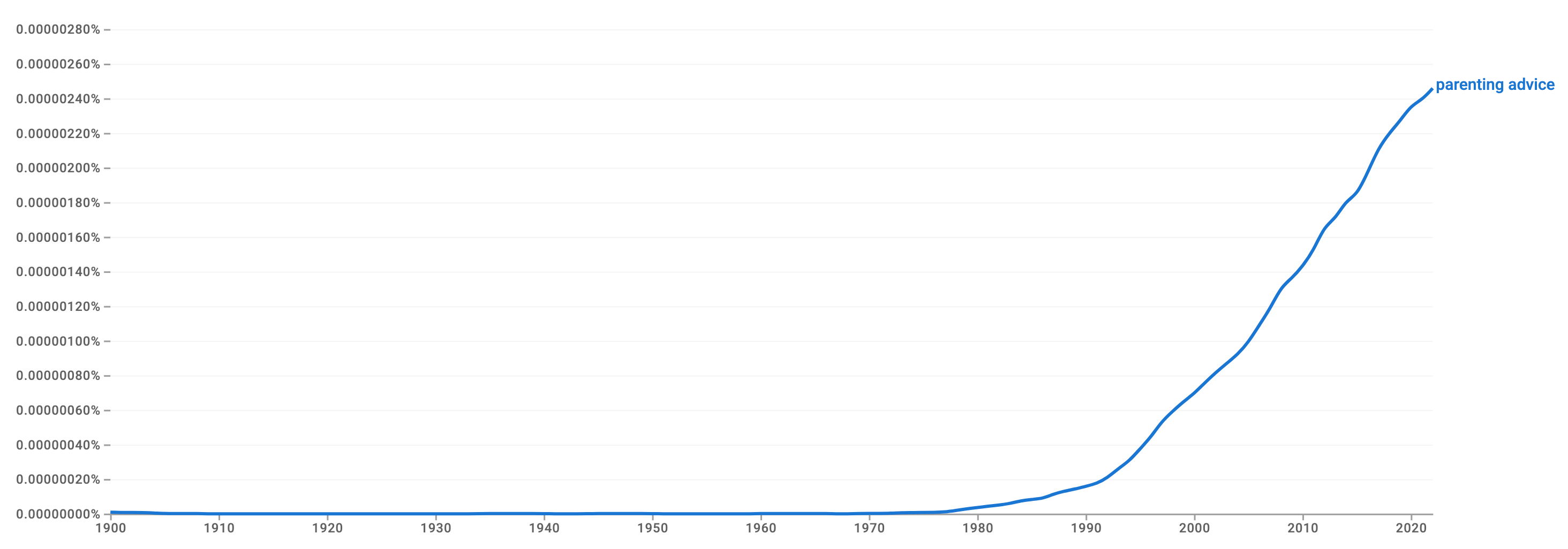
Once parents accepted that they were responsible for everything — for happiness, for outcomes, for the psychological architecture of a human being — the question became: how? And into that vacuum stepped an industry.
Dr.Bob puts it plainly: “This attachment to environmental influences on a child’s outcome opened up an entirely new commercial source of information flowing from experts and pseudo-experts. Many writers without professional training repeated previously accepted psychological theories, some over a hundred years old, and renewed unproven psychological assumptions — often without authentic professional research behind them.”
The ideas spread. Attachment parenting. Authoritative parenting. Gentle parenting. Conscious parenting. Each framework promising that if you understood and applied the right principles consistently, you would produce the outcomes you were hoping for. Not guaranteeing, exactly. But strongly implying.
What none of these frameworks adequately accounted for — what the parenting advice industry has been systematically slow to absorb — is what the research has actually been showing for decades.
Children are not blank slates.
What the Science Found
While popular parenting culture increasingly embraced the idea that the right inputs produce the right outcomes, developmental science and behavioral genetics were uncovering a more complicated picture.
Developmental science was increasingly demonstrating something humbling: children differ from one another from the very beginning. Temperament, attention, emotional reactivity, sociability — many of the traits that shape how a child moves through the world are influenced in part by genetic differences. Twin and adoption studies had been accumulating this evidence for decades. Parenting matters enormously. But it operates on children who are not blank slates.
This does not mean parenting doesn't matter. Parenting is additive; it does not start from scratch. It means the question is more complicated than we’ve been told.
Temperament — the biologically-rooted differences in how children respond to their environment — is observable from infancy. Some children are slow to warm, easily overwhelmed by novelty, and need extended time to regulate after transitions. Others are adaptable, approach-oriented, and socially curious almost from birth. Alexander Thomas and Stella Chess were among the first researchers to systematically document early temperament differences and to argue that children's characteristics shape how they experience their environments.
More recently, the differential susceptibility framework — developed by researchers including Jay Belsky and Marian Bakermans-Kranenburg, drawing on related work by W. Thomas Boyce and Bruce Ellis on Biological Sensitivity to Context — has added another layer. Some children are highly sensitive to their environment in both directions. They are more affected by adverse environments and benefit more from supportive environments than their less sensitive peers. The same child who struggles badly in a chaotic family might flourish more fully in a supportive one than an easygoing child would. The child is not receiving environmental inputs passively. The child is transacting with the environment through the filter of their own biology.
Perhaps most importantly: the relationship between parent and child runs in both directions. Children influence their parents just as parents influence their children. A highly reactive infant shapes the emotional state of its caregiver. A persistent, intense toddler changes the parenting behavior of an exhausted mother. The system is bidirectional, dynamic, and constantly adjusting — which means that the same parent, with the same intentions and the same approach, can produce very different experiences for different children. And does.
The Left Hand Problem
Dr.Bob has a way of putting this that I find more clarifying than most academic explanations.
“All the parenting articles say to teach empathy, emotional intelligence, self-regulation, and other skills without considering any genetic input,” he told me. “That is like teaching a right-handed person to use their left hand. They can do it, but it is not their preferred hand. It takes effort and motivation and is not likely to happen naturally on a regular basis.”
He continued: “There is a misconception that skills are only developmental and that everyone starts from the same place. Yet everyone accepts that some people have the ability to dunk a basketball and others have no chance. The same is true of academic skills and social-emotional skills. Some people have better skills than others.”
This is not a pessimistic observation. Dr. Bob is not saying that children cannot grow, cannot learn, cannot be shaped by good relationships and thoughtful environments. Of course they can. But there is a difference between helping a child develop the capacities they have and insisting they perform capacities that run against their grain. The first is parenting. The second is manufacturing.
The parenting advice industry has largely confused the two. It has presented social-emotional skills as though they exist on a single developmental track that every child travels at roughly the same pace, in roughly the same direction, with roughly the same potential ceiling — given the right environment. The research does not support this. Children vary. They vary in ways that are partly heritable, partly shaped by experience, and partly the product of interactions between the two that we are only beginning to understand.
A parent’s job, as Dr. Bob puts it, is to identify which skills need help, which need encouragement, and when to find alternatives.
Not to produce a specific outcome, but to understand the child who is actually there and help them learn to manage an at-risk temperament trait.
The Exhaustion Is Not an Accident
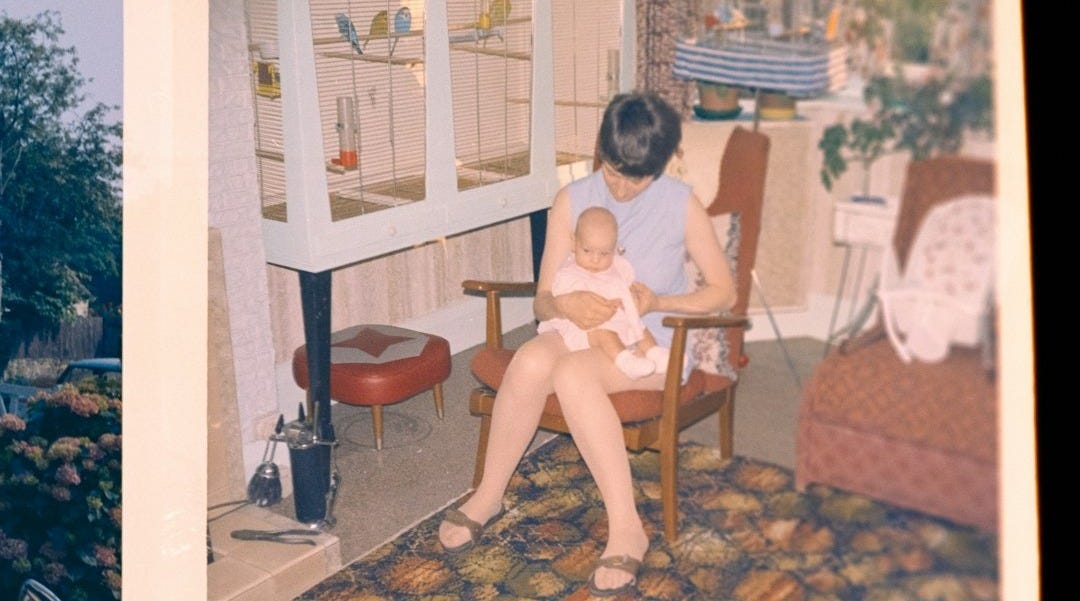
It is worth pausing to acknowledge what this cultural moment has cost the people living inside it, and particularly what it has cost mothers.
When you believe that you are the determining variable — that your child’s outcomes are essentially a function of your parenting — then every struggle becomes your failure. Every difficult behavior becomes evidence of your inadequacy. Every child who seems easier than yours becomes a verdict on you. The ordinary uncertainty of raising a human being gets recast as a diagnostic puzzle with a right answer that you are apparently just not finding yet.
Dr.Bob has been watching this pressure build for decades. “Parents have put so much pressure on themselves, particularly mothers, that the stress itself is producing its own unhealthy environment,” he told me. This is not a small thing. Parental anxiety is not just an internal experience — it is a relational one. It shapes the texture of daily life with a child. The mother who is constantly auditing her parenting for evidence of success or failure is not fully present. She is managing a performance. And children notice.
I knew this when my son was born. I knew the literature on temperament and differential susceptibility. I knew that children were not blank slates, that they arrived with their own nervous systems and their own ways of meeting the world. And yet — I still found myself, in the early months of his life, wondering whether every difficult moment was evidence that I was getting something wrong. Knowledge does not immunize you against the culture you live in. The assumptions are in the air. You absorb them without noticing.
The search for the universal parenting method — the technique that will work for every child if applied consistently enough — is built on a model of the child that is simply wrong. And because the model is wrong, the techniques inevitably disappoint. They work for some children. They fail others. And the parents of those other children absorb the failure as their own.
What Parenting Actually Is
To say that children are not blank slates is not to say that parents don’t matter. They do. Enormously.
But influence is not the same as control. Relationship is not the same as manufacturing. Parenting well—in the deepest sense—requires abandoning the dream of the determined outcome and replacing it with something more honest and more alive: attentiveness to the unique child in front of you.
What strikes me is how closely clinical observation and developmental science converge on this point: parenting is not a manufacturing process. It is a relationship. And relationships, by their nature, require responsiveness to the other—to who the other person actually is, not who you need them to be.
This does not mean lowering expectations. It does not mean abandoning structure, or consequence, or the slow, unglamorous work of helping a child learn to function in a world that is not organized around their preferences.
Those things matter. But they work best when they are calibrated to the child’s actual temperament and capacity—not applied from a universal protocol as if all children begin from the same place.
Some children need more. Some need less. Some need a different kind of support entirely. The work of parenting is, in large part, the work of figuring out which is which and then adjusting, again, for years.
Dr. Bob told me early in our conversations that somewhere along the way, parenting became a verb.
I think that is what so many of us are struggling under now: the belief that parenting is something we do to children, rather than a relationship we have with them. A performance, a protocol, a set of techniques applied to a problem with a correct solution. And when the solution doesn’t work — when the consistently attached, authoritative, emotionally attuned parent still ends up with a child who is struggling and both are suffering— there is nowhere to put it except back onto ourselves.
The science suggests something more complicated — and, I think, more freeing. Children arrive with their own temperaments, their own sensitivities, their own particular ways of meeting the world. They shape us as we shape them. The same environment affects different children differently. The relationship runs in both directions, always.
Parents matter enormously. But we are not architects standing above a preconceived blueprint. We are participants in a relationship with another human being — one who came into that relationship already themselves.
That may be a more demanding way of thinking about what parenting is. It is also, I think, a more hopeful one.
Many of the ideas in this essay emerged from my conversations with Dr. Bob Hudson. Readers who would like to hear his perspective directly can read his essay, The First Parenting Variable… Your Child here.

For readers interested in this question from a different angle, see She's Not a Better Parent. Her Child Is Easier, an essay about temperament, genetics, and the uncomfortable possibility that parenting is influence—not control.

References
Belsky, J., & Pluess, M. (2010). Children’s differential susceptibility to effects of parenting. Family Science, 1(1), 14–25. https://scispace.com/papers/children-s-differential-susceptibility-to-effects-of-44bky92agy?utm_source=chatgpt
Boyce, W. T., & Ellis, B. J. (2011). Differential susceptibility to the environment: Toward an understanding of sensitivity to developmental experiences and context. Development and Psychopathology, 23(1), 1–5. https://scispace.com/papers/differential-susceptibility-to-the-environment-toward-an-137bf9c18n?utm_source=chatgpt
Saudino, K. J. (2005). Behavioral genetics and child temperament. Journal of Developmental & Behavioral Pediatrics, 26(3), 214–223. https://scispace.com/papers/behavioral-genetics-and-child-temperament-46fxk4ul24?utm_source=chatgpt
Sameroff, A. J. (2009). The Transactional Model. In A. J. Sameroff (Ed.), The Transactional Model of Development: How Children and Contexts Shape Each Other. American Psychological Association.
Thomas, A., & Chess, S. (1977). Temperament and Development. Brunner/Mazel.
 | A guest post by
|
A very important piece.
I hope that helping parents understand this can relieve some of the burden and anxiety that modern parenting has come to carry. Parenting has increasingly become something we evaluate ourselves on, another domain to optimize, improve, and perfect.
The result is that many parents live with a constant sense of responsibility for outcomes that are often far less under their control than they imagine.
This pressure doesn't just affect parents. It affects children too. When parenting becomes another endless self-improvement project, everyone in the family bears the cost.
Ironically, although modern parenting is often described as child-centered, it can become remarkably parent-centered in practice. Instead of focusing on the child in front of us, we become preoccupied with ourselves: What am I doing wrong? What am I doing right? What should I be doing differently? How can I improve?
The child becomes the measure of our success, and parenting becomes another test we feel compelled to pass.
This is 90% of my practices presenting problem. Well articulated!!